
Fareham in 1650: A Town Recovering from Civil War
In 1650, Fareham was a small market town and port at the northern edge of Portsmouth Harbour. There was no railway, no electricity, no piped water and no large suburban development. Most of the surrounding area was farmland, and the life of the town was concentrated around the High Street, Fareham Creek and the parish church of St Peter & St Paul.
A useful opening image would be an early map of Hampshire or Portsmouth Harbour showing Fareham. Search Google for Fareham 17th century map Hampshire or Portsmouth Harbour Fareham old map 1600. A period map immediately helps readers see how small and rural the settlement was.
The people of Fareham were also living in the immediate aftermath of the English Civil War. Fareham had supported the Royalist cause, and Parliamentarian forces visited the town several times during the conflict and its aftermath. The war had only recently ended, and Charles I had been executed in 1649. For people living here, these were current events rather than distant history.
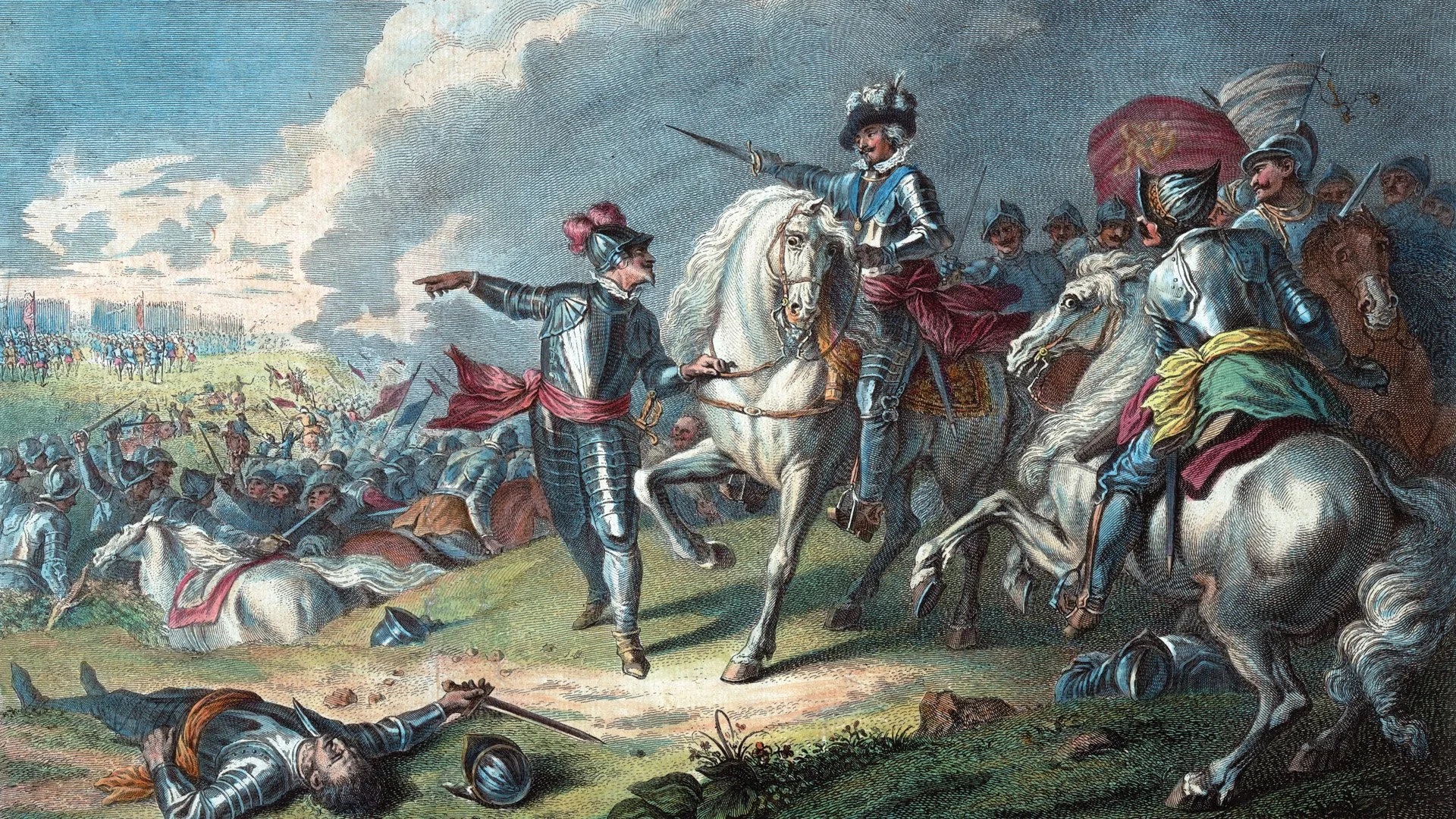
Battle of Naseby, hand-coloured copper engraving
A market town beside the water
Fareham had been an established market settlement for centuries. Its location gave it an important advantage: Fareham Creek connected the town with Portsmouth Harbour and the wider south coast.
The countryside around Fareham supplied agricultural produce, timber and other goods, while the creek allowed heavier materials to be moved by boat. Coastal trade was particularly valuable at a time when roads could be slow and difficult.
The High Street was already an important part of the settlement, although someone walking along it in 1650 would have experienced something much smaller and more rural than the modern town.
A seventeenth-century market scene would work well at this point. Search for 17th century English market town engraving public domain. It does not need to be Fareham itself. A caption such as “A seventeenth-century English market scene, illustrating the kind of trading activity found in towns such as Fareham” keeps the distinction clear.
How many people lived in Fareham?
There was no national census in 1650, so we cannot give a reliable population figure for the town. Britain’s first modern census would not take place until 1801.
By 1801 the civil parish of Fareham contained just over 3,000 people, so the settlement of 1650 was certainly small by modern standards. The parish itself covered a much larger rural area than the built-up town.
Life would also have felt much more local. Most people’s world consisted of their household, neighbours, extended family, parish, workplace and nearby farms. The church registers record generations of the same families appearing through baptisms, marriages and burials.
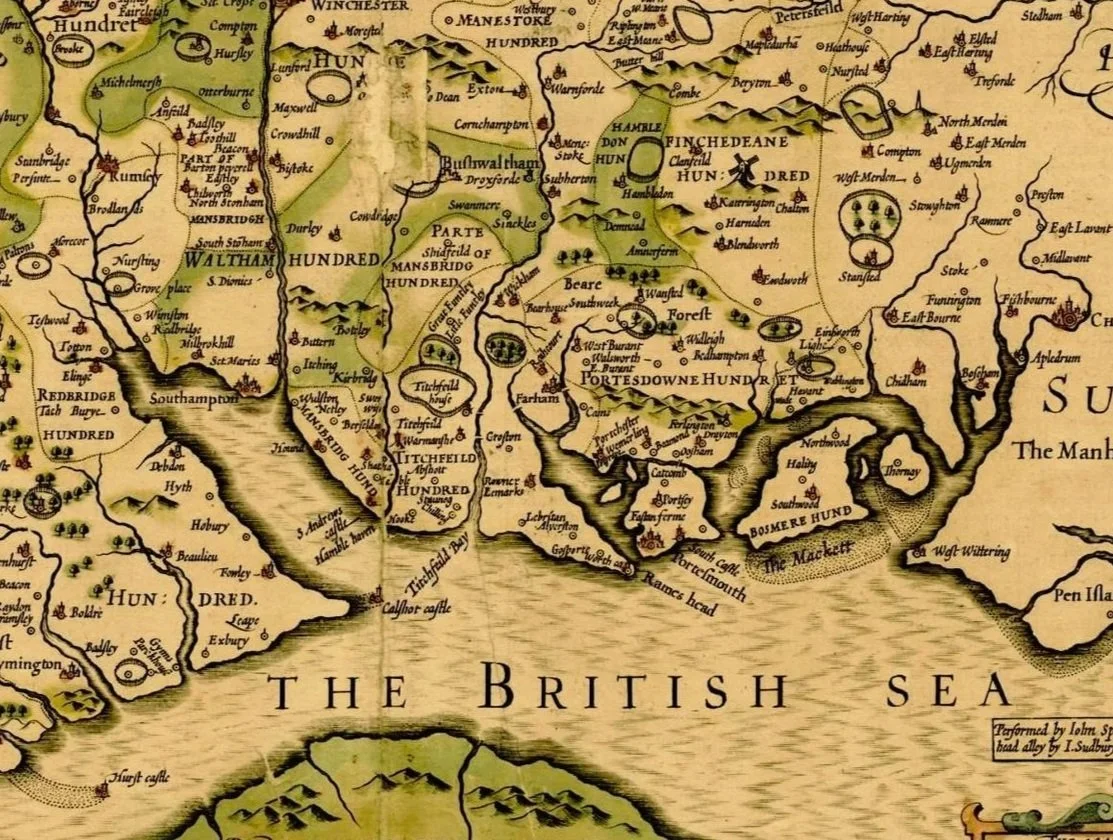
Fareham on the John Speed's Map of Hampshire, 1611
St Peter & St Paul’s at the centre of the community
By 1650, St Peter & St Paul’s was already an ancient church.
Parts of the surviving building include Saxon masonry, a late Norman arch and medieval work from later centuries. The church that people entered in 1650, however, would have looked considerably different from the one standing today.
The present tower was not built until 1742. The nave was later rebuilt and enlarged, particularly in the nineteenth and twentieth centuries. A seventeenth-century parishioner would therefore have known a smaller, more medieval building.
This is a good place to use one of your own photographs rather than an outside historical image. Photograph the oldest surviving masonry, Norman arch, medieval stonework or another feature that would already have existed in 1650.
A caption could read:
“Parts of St Peter & St Paul’s standing today were already centuries old when people worshipped here in 1650.”
The church was important for much more than Sunday worship. Baptisms, marriages and burials were recorded here. The churchyard was a principal place of burial. Churchwardens had responsibilities that extended into community life, and the parish formed one of the basic structures through which local society was organised.
The surviving parish registers begin in 1558, which means that the names of real people living in Fareham around this period can still be traced today.
A church living through religious upheaval
The religious world of 1650 was unsettled.
The previous century had seen the English Reformation, the break with Rome, the reigns of Edward VI and Mary I, and the Elizabethan settlement. Then came civil war and the collapse of the monarchy.
By 1650 England was a Commonwealth. Bishops had been abolished and the traditional structures of the Church of England had been disrupted. The Book of Common Prayer had been prohibited under Parliamentarian rule.
The restoration of the monarchy, bishops and Prayer Book worship would come in the following decade.
For ordinary worshippers in Fareham, national arguments about monarchy, episcopacy, Parliament and worship would therefore have affected the life of their own parish church.
Everyday life in Fareham
The practical differences between life in 1650 and life today were enormous.
There was no electricity. Homes depended on daylight, candles, rushlights and oil lamps. Water had to be obtained from wells, pumps or other local sources. Cooking and heating depended mainly upon open fires.
Travel meant walking, riding a horse, using a cart or travelling by boat. Even short journeys could take considerable time, especially when roads were poor.
Most of the surrounding countryside was agricultural. People worked as farmers, labourers, craftsmen, merchants, servants and tradesmen. Fareham’s location also meant there were livelihoods connected with shipping and maritime trade.
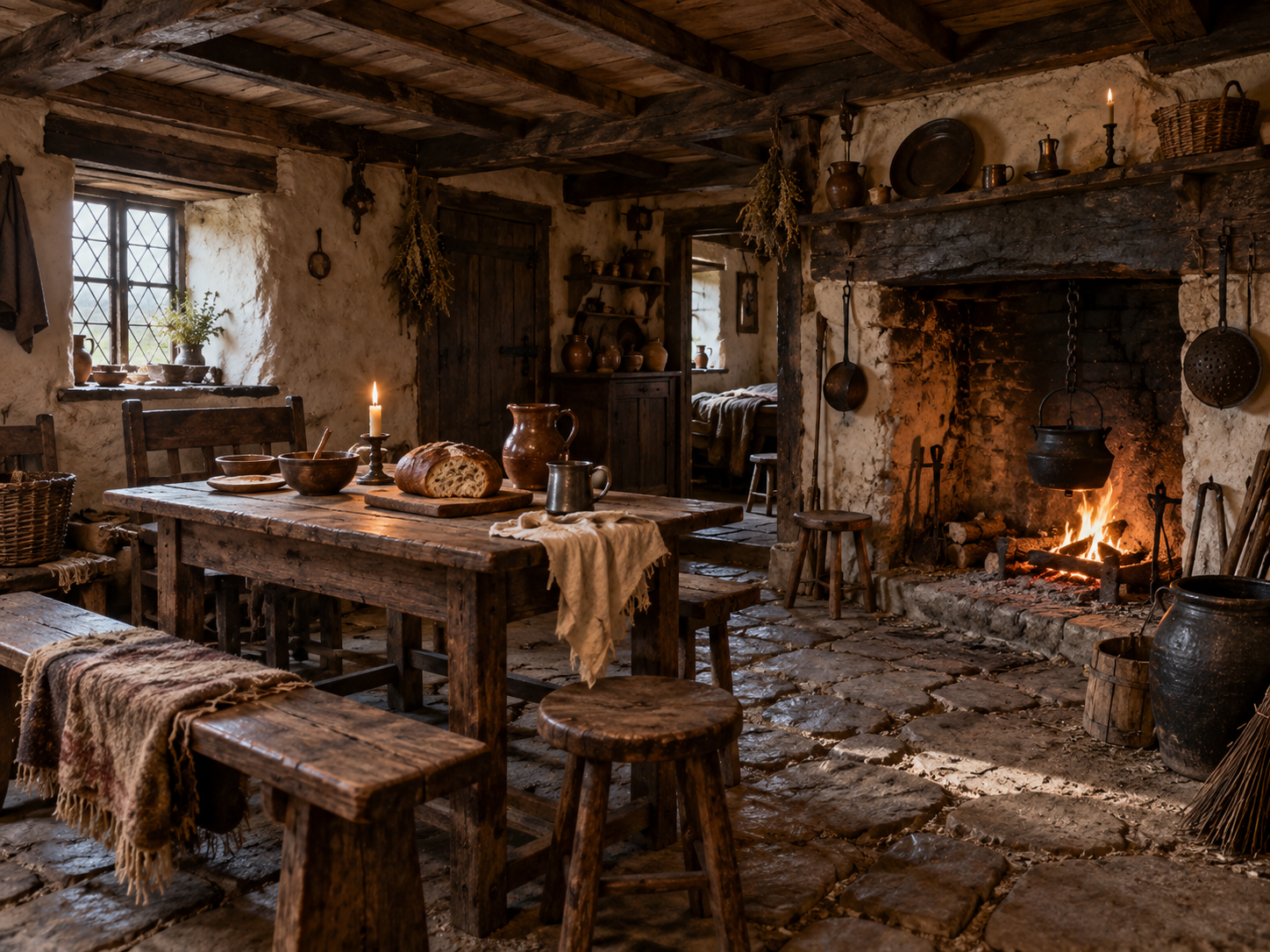
Typpical home of a common person at the time.
Fareham and Portsmouth Harbour
Fareham’s relationship with Portsmouth was already significant, although the great naval expansion of the eighteenth century was still ahead.
Portchester Castle stood nearby, and Portsmouth Harbour was becoming increasingly important strategically. Fareham benefited from being close enough to Portsmouth to participate in its maritime economy while remaining a distinct market town surrounded by countryside.
This relationship would become increasingly important during the following century. Naval officers, merchants and wealthy families would settle in and around Fareham, and the Royal Navy would leave a strong mark upon the town.
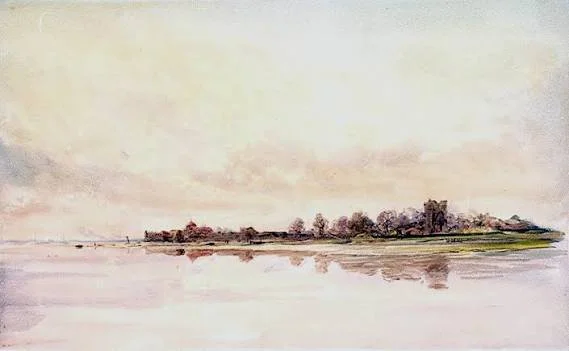
Portchester Castle
The world into which William Price was born
William Price was born in Fareham in 1651.
That places him almost exactly at the beginning of the next chapter in the town’s history. He was born into a Fareham emerging from civil war, political instability and religious upheaval.
During his lifetime the monarchy would be restored, trade would grow and Fareham would become increasingly connected with the expanding naval world of Portsmouth.
The town he knew as a child was still small, rural and closely organised around its parish church. Yet some of the developments that would shape Georgian Fareham were already beginning.
Fareham in 1650 at a glance
Population: No reliable census figure; a small town within a much larger rural parish.
Government: England was a Commonwealth after the execution of Charles I in 1649.
Character of the town: Market town, agricultural centre and small port.
Transport: Walking, horses, carts and boats.
Electricity: None.
Gas lighting: None.
Mains water: None.
Railway: None.
Parish church: The older medieval St Peter & St Paul’s, before the present tower and later enlargements.
Church records: Baptism, marriage and burial registers survive from 1558.
For somebody standing in Fareham in 1650, the modern town would be almost unrecognisable. Yet St Peter & St Paul’s would still provide a point of continuity. It had already stood for centuries then, and parts of the same church still stand at the centre of Fareham today.
