
The Revd Arthur H. Watkins: Fareham in the Post-War Years
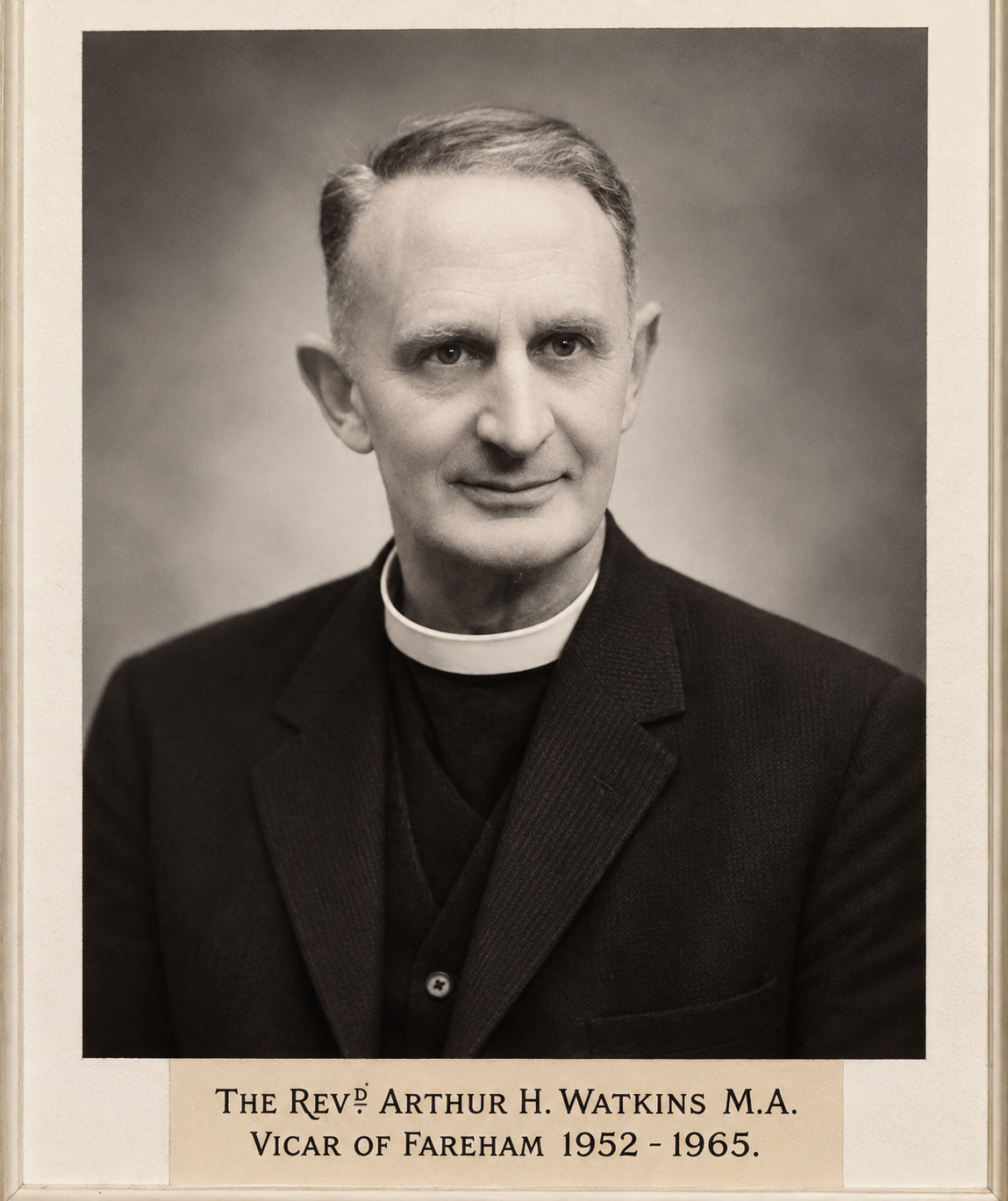
The Revd Arthur H. Watkins served as Vicar of Fareham from 1952 to 1965, leading St Peter & St Paul through a period when both the town and the Church of England were adjusting to the realities of post-war Britain.
Very little securely documented biographical information about Watkins himself is readily available, so the clearest way to understand his ministry is through the world in which he served.
When Watkins arrived in Fareham in 1952, Britain was still living with the consequences of the Second World War. Food rationing continued until 1954, housing shortages remained serious, and many families were still rebuilding lives disrupted by military service, bombing and bereavement.
Fareham was changing quickly. New housing was spreading beyond the older town centre, car ownership was increasing, and the population was becoming more mobile. The traditional pattern in which most people lived, worked and worshipped within the same small locality was beginning to weaken.
The wider Portsmouth area was changing too. The Royal Navy remained one of the dominant influences on local life, but the Navy itself was shrinking from its wartime size and adapting to the Cold War, nuclear weapons and new technology. Fareham continued to contain large numbers of naval and military families whose work could take them away from the area for long periods.
Watkins also served during a major period of change within the Church of England. The 1950s still retained many features of traditional parish life: large numbers of baptisms, weddings and funerals passed through the parish church, Sunday schools remained important, and clergy often occupied a visible place in civic life.
Yet by the early 1960s British society was beginning to change rapidly. Church attendance was declining, particularly among younger adults, while television, greater prosperity, new patterns of leisure and changing attitudes towards authority were reshaping everyday life.
One of the most important events during Watkins’s incumbency came in 1961, when two new bells were added to the tower of St Peter & St Paul. One was named “Historicus” in memory of George Lawrence Privett, the parish clerk and local historian who had served the church for thirty-seven years. The addition of the bells linked the post-war parish with generations of Fareham history preserved in the building.
Watkins’s thirteen years as vicar therefore stood between two very different periods. He arrived in a Britain still recognisably shaped by wartime sacrifice and traditional parish structures, and left in the mid-1960s as the country entered an era of rapid cultural and social change.
His ministry at St Peter & St Paul belongs to the period when Fareham was becoming the modern town familiar today, while the parish church was beginning to face many of the questions about mission, community and changing patterns of belief that would shape the rest of the twentieth century.
