
Sir Edward Brace: The Sailor’s Friend
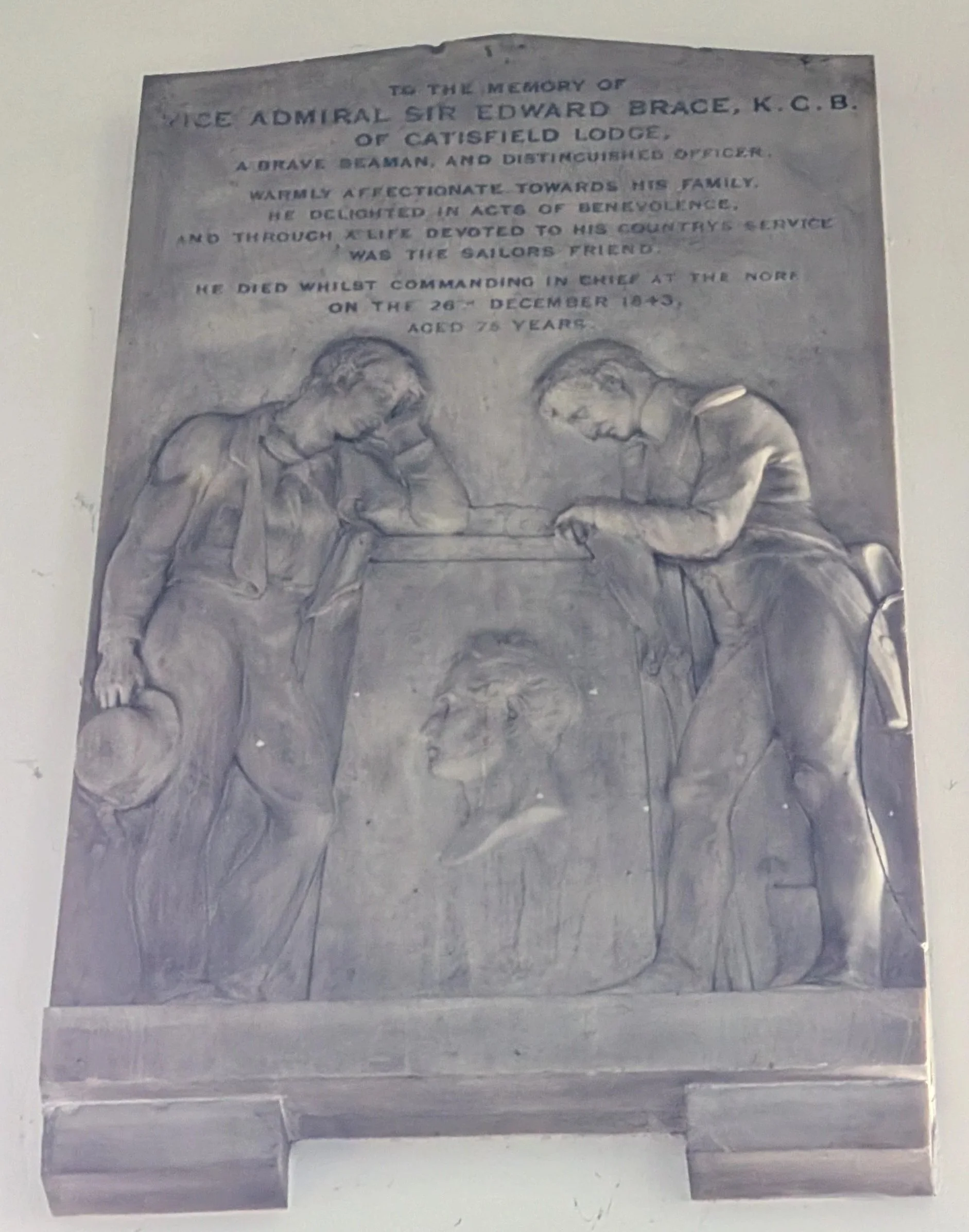
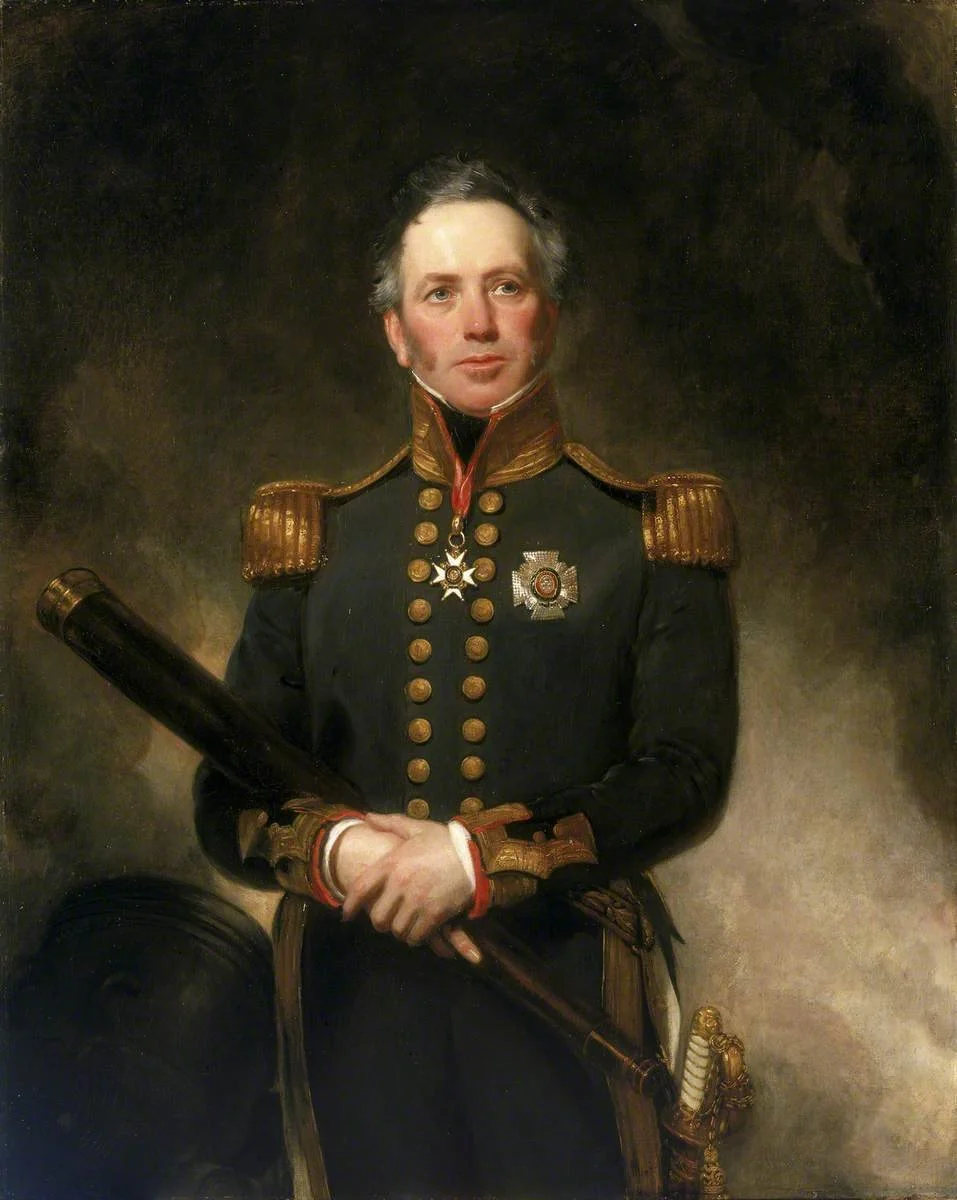
High on the wall of St Peter & St Paul’s Church in Fareham stands a memorial to a man who spent more than sixty years serving at sea. His name was Vice-Admiral Sir Edward Brace KCB, and his story takes us from the Hampshire coast to the wars with France, the Mediterranean, and one of the fiercest naval battles of the early nineteenth century.
Edward Brace entered the Royal Navy in 1781, when he was only about eleven years old. The Navy of that age was a hard world in which boys quickly learned the realities of discipline, storms, disease, separation from home and war. Brace remained. He rose steadily through the service, becoming a lieutenant in 1792, a commander in 1797 and a captain in 1800. By 1803 he had become flag-captain to Admiral William Cornwallis, one of Britain’s senior naval commanders during the wars with France. Royal Museums Greenwich
For decades, his life was shaped by the sea. Britain was fighting Revolutionary and then Napoleonic France, and the Royal Navy carried an immense responsibility for defending the country, protecting trade and maintaining British forces across the world. Brace served both at home and in the Mediterranean through these turbulent years. By the time Napoleon was finally defeated, Brace had already given most of his adult life to naval service.
Then, in 1816, came the event for which he would be particularly remembered.
Brace was given command of HMS Impregnable, one of the largest warships in the British fleet, carrying nearly one hundred guns. She joined the squadron commanded by Admiral Sir Edward Pellew, later Lord Exmouth, which sailed for Algiers on the North African coast.
The mission concerned the capture and enslavement of Europeans by the North African corsair states. When the British and Dutch fleet arrived at Algiers in August 1816, they demanded the release of the British consul and more than a thousand Christian captives. Negotiations failed, and on 27 August 1816 the fleet moved into position before the harbour. Royal Museums Greenwich
What followed was hours of extraordinarily intense fighting.
The Impregnable failed to reach her intended anchoring position and found herself dangerously exposed to the Algerian batteries. Cannon fire tore into the ship. Men were killed and wounded around Brace as the battle continued. Contemporary accounts record that the Impregnable suffered exceptionally heavy casualties and severe damage. It became one of the hardest-hit ships of the British fleet. Royal Museums Greenwich
Yet the ship continued fighting.
By the end of the engagement, much of the Algerian fleet and harbour defences had been devastated. The following settlement secured the release of 1,083 Christian captives, together with the detained British consul, and restitution was agreed. Royal Museums Greenwich describes the action as one of the major operations that broke the power of the Barbary corsairs who had preyed upon Mediterranean shipping for centuries. Royal Museums Greenwich
Brace’s part in the battle was not without controversy. His ship’s position had exposed her to terrible punishment, and later writers criticised the error. Yet his career continued for another quarter of a century. The story preserved in Fareham is therefore also the story of a man who experienced danger, responsibility, success and criticism and continued serving.
He was promoted Rear-Admiral in 1830, became a Knight Commander of the Order of the Bath in 1834 and was promoted Vice-Admiral in 1838. In 1841, sixty years after he had first entered the Navy as a boy, he was appointed Commander-in-Chief at the Nore, one of the Royal Navy’s major home commands. He died while still holding that office on 26 December 1843. Royal Museums Greenwich
By then, Fareham had become home. Brace lived at Catisfield Lodge, and after his death he was buried in the family vault at Fareham. His memorial was placed here in St Peter & St Paul’s Church.
Perhaps the most striking part of the monument is the way his life is remembered. Titles such as Vice-Admiral and Knight Commander tell us what he achieved. The memorial also remembers his courage, his affection for his family and a much simpler description:
“The sailor’s friend.”
After more than sixty years in the Navy, that was part of the legacy his family chose to carve into stone.
There is something worth remembering in that. Positions eventually pass to somebody else. Medals gather dust. Even great battles become chapters in history books. Character leaves a different kind of memory. Sir Edward Brace rose from an eleven-year-old boy entering the Navy to one of its senior commanders, yet those who commemorated him wanted future generations to know something about the kind of man he had been to the people around him.
More than 180 years later, his memorial still stands in our church. It connects an old stone wall in Fareham with wooden warships, Mediterranean battles, thousands of sailors and a lifetime spent in service.
And perhaps the four words carved there remain the best summary of all:
He was the sailor’s friend.
If you are descended from Sir Edward Brace’s wider family, have information about Catisfield Lodge, or possess photographs, letters or family history connected with him, we would love to hear from you.
