
The Revd James Edward Tarbat: Fareham Through War and Social Change
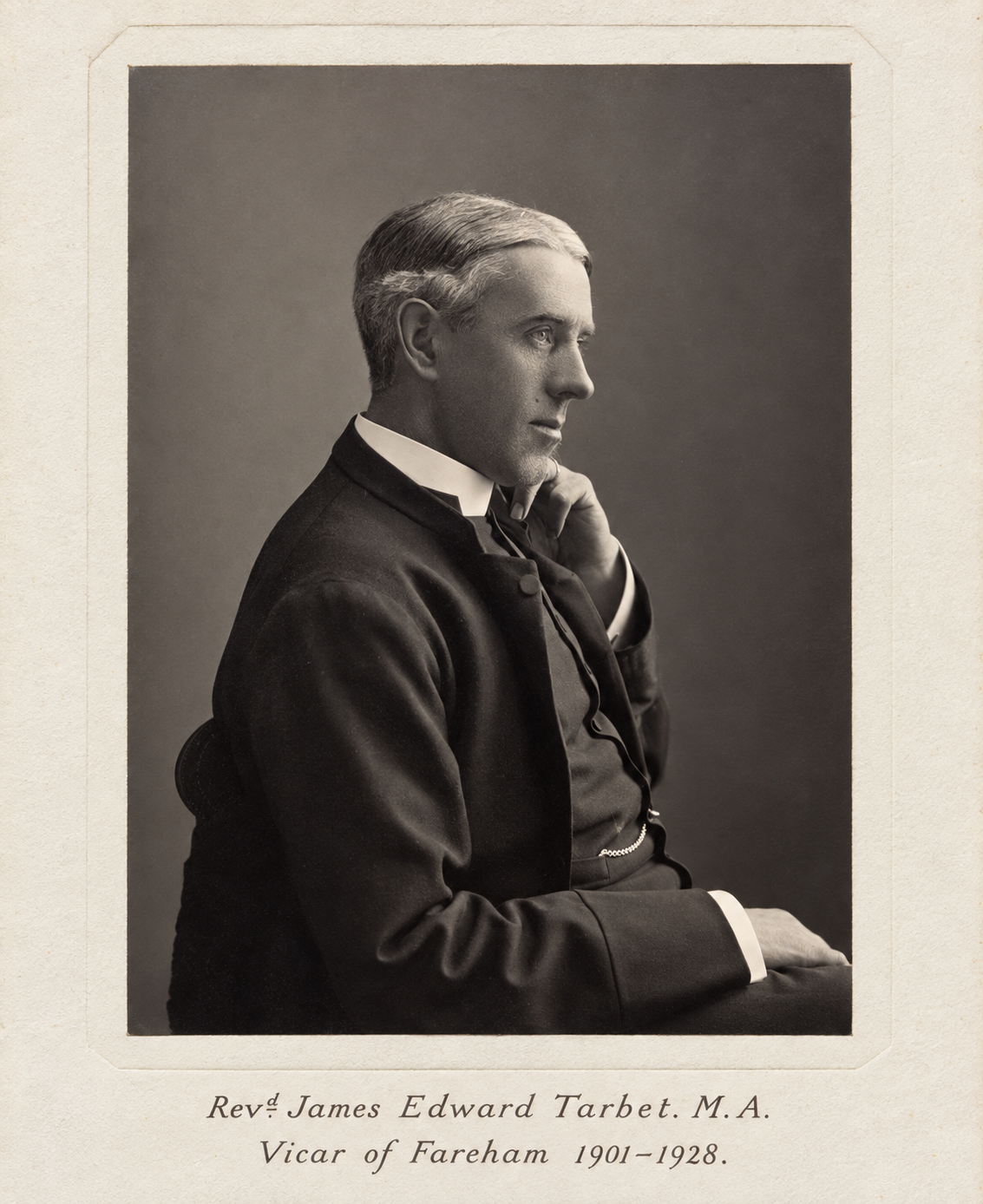
The Revd James Edward Tarbat served as Vicar of Fareham from 1901 to 1928, a ministry of twenty-seven years that carried St Peter & St Paul from the final years of the Victorian world into the aftermath of the First World War.
Tarbat was born in 1863 and graduated from Cambridge in 1886. Before coming to Fareham he served as a curate in Reading and later at Weybridge. He was inducted as Vicar of Fareham on 30 March 1901, after an interregnum of about three months.
His first year in the parish was not easy. In a letter published in the parish magazine in January 1902, Tarbat wrote candidly about arriving as a stranger, feeling the weight of responsibility and experiencing considerable loneliness during his first months in Fareham. Over time, however, he became firmly established in the affection of the parish.
He married Ethel Mary Victoria Durnford in 1903. She came from a prominent military family, and together they had two children, Alan Cecil and Evelyn Mary. The family lived in Fareham during most of Tarbat’s incumbency.
Tarbat’s interests extended well beyond Sunday services. He took a strong interest in education and became the first chairman of governors of Price’s School after its reorganisation. Contemporary reports also remembered his work in the temperance movement and in the wider civic life of the town.
He was also a serious naturalist. A herbarium associated with J. E. Tarbat survives today in the Hampshire Cultural Trust collections, containing 229 sheets of vascular plants collected mainly in Hampshire and southern England between 1891 and 1923. His papers on entomology were also preserved at Cambridge.
His ministry coincided with one of the most difficult periods in modern British history. When Tarbat arrived in Fareham in 1901, Queen Victoria had just died and Edward VII had come to the throne. By the time he left, Britain had lived through the First World War, the death of hundreds of thousands of servicemen, the influenza pandemic, major social reform and profound changes in the place of the Church within national life.
For Fareham, the First World War would have been especially immediate. Portsmouth remained one of the principal naval bases of the British Empire, and the whole district was shaped by sailors, soldiers, dockyard workers and military families. Parish ministry during those years meant dealing not only with ordinary worship and pastoral care, but also with bereavement, separation, wartime anxiety and the long consequences of loss.
Tarbat remained Vicar of Fareham until 1928. After retirement he lived in Winchester and died there on 17 February 1937, aged seventy-three. His funeral took place in Fareham, where he was buried.
His long ministry places him among the significant twentieth-century vicars of St Peter & St Paul. He arrived in an Edwardian market town and left a parish that had been transformed by war, social change and the beginnings of modern Britain.
Through his work in the church, education, temperance and natural history, James Edward Tarbat became part of both the religious and civic life of Fareham for more than a quarter of a century.
